
How performance season can help you prepare for your next Behavioral interview
'Tis the season, but the work you put in now will pay off later

🙋♂️ Hi there, I’m Austen, a former Senior Engineering Manager and Hiring Committee Chair at Meta where I did over 1,000 interviews and trained 100s of interviewers, setting interview structures and picking questions. Subscribe to Mastering the Behavioral Interview to get tips and resources on preparing for the most underrated SWE interview type.
When I was at Meta, performance reviews happened every six months through a system called the Performance Summary Cycle (PSC). It was (and likely still is) notorious for being an intense process of writing 360-degree reviews for yourself, your peers, and your manager.
Halfway through my time there, I posted a meme in our internal Facebook group for employees who had joined on the same day. It perfectly captured the toll taken by PSC season:
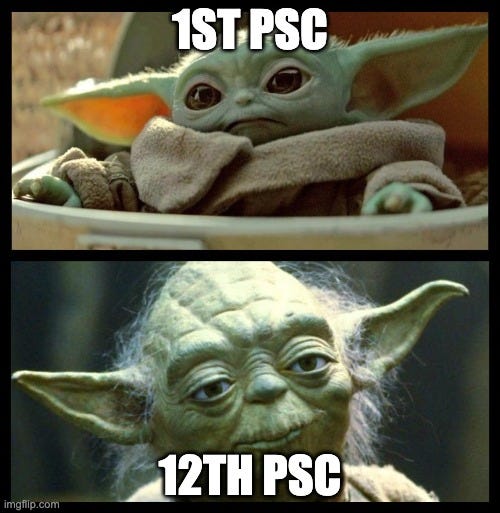
While I can’t make writing your self-review more enjoyable, I can offer insights on how to turn this effort into something more valuable than just checking a box. Done right, performance season can set you up for success in future behavioral interviews.
Use reflection to identify what worked (and what didn’t)
Writing your self-review is essentially a structured reflection on your recent work—just like preparing for a behavioral interview. It’s an opportunity to analyze what repeatable behaviors led to meaningful results and what approaches you might want to avoid in the future.
Ask yourself:
Did I hit the goals I set for myself? If so, what specific actions contributed to my success?
Did I take initiative, provide feedback, respond to feedback, or successfully prioritize my work?
Did I leverage data to inform decisions, communicate effectively across teams, or resolve conflicts?
How did I grow technically? Did I design a complex system, refactor legacy code, improve test coverage, or build internal tools?
On the flip side, assess your growth areas:
Where did I fall short of my goals, and why?
Were there conflicts I could have anticipated and prevented?
What lessons should I carry forward to improve my impact in the next cycle?
If your organization encourages self-reflection through performance reviews, take advantage of it. Even if they don’t, make a habit of documenting these insights in a format that remains accessible—especially if you ever find yourself unexpectedly moving on from your current role.
Having a well-documented reflection will help you craft compelling, concrete stories for future behavioral interviews.
Copy accomplishments to your Brag Document (or Yay Me File)
If you’re not already maintaining a Brag Document—or as I heard Irina Stanescu call it, a “Yay Me File,” which I love—performance review season is the perfect time to start.
Use any format that works for you, but keep it structured enough to easily translate into interview stories. If you’re looking for guidance, I have a behavioral-interview-oriented format available here.
Ideally, you’re updating this document throughout the year so that when performance season rolls around, you already have a solid starting point. But if not, at the very least, update it every performance cycle. Your future self will thank you when it's time to prepare for interviews.
This document becomes your go-to resource for selecting and refining “Tell me about a time…” stories—bread and butter for behavioral interview success.
Simple but crucial tactics
Even though these might seem obvious, many people overlook them:
Save your self-review in a personal, accessible location for future reference.
Archive feedback from your manager (such as downward reviews) to track growth and performance trends over time but also as a reference when preparing for future interviews.
Document numerical goals and results. You’ll forget the specifics if you don’t write them down. Metrics make your accomplishments more compelling in interviews and on your resume.
Performance reviews aren’t just about career progression within your current company—they’re a natural forcing function to prepare for your next role, whenever that may be. By treating them as a training ground for behavioral interviews, you’ll make the process work for you long after the review cycle ends.